

Your Complete Dental Implants Guide to a Confident New Smile
If you are living with one or more missing teeth, you already know the impact it has on your confidence, your ability to chew comfortably, and even your speech. This dental implants guide walks you through everything you need to know — from how the procedure works and who qualifies, to what it costs and what recovery looks like. Dental implants are widely considered the gold standard in permanent tooth replacement, and for good reason: they look, feel, and function almost identically to natural teeth.
What Are Dental Implants and How Do They Work?
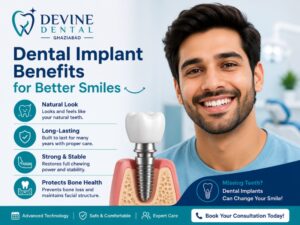
A dental implant is a small titanium post that a surgeon places directly into the jawbone, replacing the root of a missing tooth. Over a period of several weeks to months, the bone fuses to the titanium through a process called osseointegration. Once that bond is secure, a connector piece called an abutment is attached, followed by a custom-made dental crown that matches the color and shape of your surrounding teeth.
The result is a restoration that is:
- Stable and permanent — the implant does not slip or shift the way a denture can
- Bone-preserving — the titanium post stimulates the jawbone, preventing the bone loss that naturally follows tooth loss
- Natural-looking — the porcelain or ceramic crown is crafted to blend seamlessly with your smile
- Long-lasting — with proper care, implants can last 20 to 30 years or more
The Three Components of a Dental Implant
| Component | Material | Function |
|—|—|—|
| Implant post | Titanium or zirconia | Replaces the tooth root; anchors into the jawbone |
| Abutment | Titanium or ceramic | Connects the post to the crown |
| Crown | Porcelain or ceramic | Visible tooth; provides chewing function |
Am I a Good Candidate for Dental Implants?
Most adults in good general health can receive dental implants, but a thorough evaluation by a dentist or oral surgeon is essential before moving forward. Several factors affect candidacy.
Factors That Support Candidacy
- Adequate jawbone density — there must be enough bone to anchor the implant securely
- Healthy gums — active periodontal disease must be treated before implant placement
- Non-smoker or willing to quit — smoking significantly increases the risk of implant failure
- Controlled chronic conditions — well-managed diabetes or blood pressure does not automatically disqualify a patient
- Fully developed jaw — implants are generally not placed in patients under the age of 18
When a Bone Graft May Be Needed
If you have experienced significant bone loss in the jaw — which often happens when a tooth has been missing for a year or more — your provider may recommend a bone graft procedure before placing the implant. This adds several months to the overall timeline but greatly improves the odds of a successful outcome.
Your Dental Implants Guide to the Full Procedure
Understanding the timeline helps set realistic expectations. The full process typically spans four to twelve months, depending on your individual healing response and whether preparatory procedures are needed.
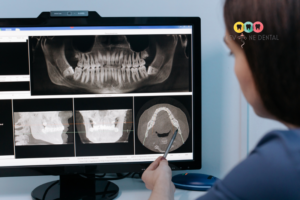
- Initial consultation and imaging — Your dentist takes digital X-rays or a 3D cone beam CT scan to assess bone volume and plan implant placement precisely.
- Tooth extraction (if needed) — If the damaged tooth is still present, it is removed. Some providers can place the implant at the same appointment (immediate placement).
- Bone graft (if required) — Grafting material is placed and given time to integrate, usually three to six months.
- Implant placement surgery — The titanium post is inserted into the jawbone under local anesthesia. Sedation options are available for anxious patients.
- Osseointegration healing period — Bone gradually fuses to the implant over three to six months.
- Abutment placement — Once the implant is stable, the abutment is attached in a minor follow-up procedure.
- Crown fabrication and fitting — Impressions or digital scans are taken, and a custom crown is manufactured and cemented into place.
How Much Do Dental Implants Cost?
Cost is one of the most common concerns patients have, and the honest answer is that it varies considerably. A single dental implant in the United States typically ranges from $3,000 to $5,500 when you factor in the consultation, surgery, abutment, and crown. More complex cases involving bone grafts, multiple implants, or full-arch restorations will cost more.
Factors That Influence the Final Price
- Geographic location and local cost of living
- The experience and credentials of the surgeon or prosthodontist
- Whether sedation or anesthesia beyond local numbing is used
- The type and brand of implant system
- The material chosen for the crown
- Whether preparatory procedures such as extractions or grafting are needed
Insurance and Financing
Many dental insurance plans still classify implants as a cosmetic procedure and offer limited or no coverage. However, this is changing. Some plans cover portions of the crown or the surgical fee. It is worth requesting a pre-authorization estimate from your insurer before proceeding. Many dental practices also offer in-house payment plans or work with third-party financing options such as CareCredit.
Recovery and Aftercare
Recovery from the implant placement surgery is generally manageable for most patients. Swelling, mild bruising, and some discomfort are normal in the first three to five days and are well controlled with over-the-counter pain relievers and prescribed medications.
Tips for a Smooth Recovery
- Apply an ice pack to the cheek for the first 24 hours to reduce swelling
- Stick to soft foods — yogurt, scrambled eggs, mashed potatoes, and smoothies — for the first week
- Avoid smoking throughout the entire healing period
- Rinse gently with warm salt water starting the day after surgery
- Attend all follow-up appointments so your provider can monitor integration
- Do not use a straw for the first few days, as suction can disrupt the surgical site
Long-Term Implant Care
Once the implant is fully integrated and the crown is in place, daily care looks very similar to caring for natural teeth. Brush twice a day with a soft-bristled toothbrush, floss daily using implant-friendly floss or an interdental brush, and see your dentist for regular cleanings and check-ups every six months. With this level of care, implants routinely last decades.
Dental Implants vs. Other Tooth Replacement Options
It helps to understand how implants compare to the alternatives before making a decision.
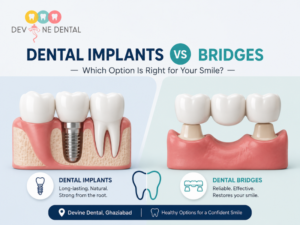
| Option | Average Lifespan | Bone Preservation | Feels Natural | Removable |
|—|—|—|—|—|
| Dental implant | 20–30+ years | Yes | Yes | No |
| Fixed dental bridge | 10–15 years | No | Mostly | No |
| Partial denture | 5–10 years | No | Less so | Yes |
| Full denture | 5–10 years | No | Less so | Yes |
Bridges and dentures serve important purposes and may be the right choice for some patients, particularly when budget or health conditions make implants unsuitable. However, implants are the only option that actively preserves bone and replicates the full function of a natural tooth root.
👉 Book your consultation today: https://devinedental.in/blog
Frequently Asked Questions
How painful is dental implant surgery?
Most patients are surprised by how manageable the discomfort is. The surgery itself is performed under local anesthesia, so you should feel pressure but not sharp pain. Post-operative soreness is typically at its peak in the first two days and is controlled with standard pain medication. Many patients return to desk work within one to two days.
How long do dental implants last?
The titanium implant post itself can last a lifetime if you maintain good oral hygiene and avoid habits such as smoking or grinding your teeth without a night guard. The crown on top typically lasts 15 to 25 years before it may need to be replaced due to normal wear.
Can dental implants fail?
Implant failure is relatively uncommon, occurring in roughly 5 to 10 percent of cases. The most common causes include infection (peri-implantitis), smoking, uncontrolled diabetes, and insufficient bone density. Early-stage implant problems caught at follow-up appointments are often treatable without losing the implant.
Is there an age limit for dental implants?
There is a lower age limit — the jawbone must be fully developed, which typically occurs around age 18 — but there is no upper age limit. Many patients in their 70s and 80s successfully receive dental implants. Overall health and bone density matter far more than age.
Do dental implants look natural?
Yes. The crown is custom-fabricated using shade-matching technology to blend with your surrounding teeth. Most people cannot tell an implant crown from a natural tooth simply by looking at it.
Conclusion
Dental implants represent one of the most significant advances in modern dentistry. By replacing both the root and the visible crown of a missing tooth, they restore full chewing function, protect your jawbone from deterioration, and deliver a result that looks and feels entirely natural. The process requires patience — full treatment can take several months — but the long-term benefits in comfort, confidence, and oral health make implants a worthwhile investment for most eligible patients. If you are considering tooth replacement, a consultation with a qualified implant dentist or oral surgeon is the best first step toward understanding whether this solution is right for you.