
Many people ignore dental problems until the pain becomes unbearable. Unfortunately, waiting too long can turn a small issue into a bigger problem that may affect your comfort, confidence, and overall oral health.
Your teeth and gums often give early warning signs when something is wrong. Recognizing these signs and seeking timely dental care can help prevent complications and keep your smile healthy for years to come.
At Devine Dental, Ghaziabad, we believe that early diagnosis and treatment are the keys to maintaining strong teeth and healthy gums. Here are seven warning signs you should never ignore.
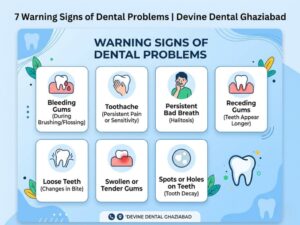
1. Persistent Tooth Pain
Occasional sensitivity is common, but continuous tooth pain is not normal.
If you experience pain while eating, drinking, or even when resting, it may indicate a deeper issue. Tooth pain can result from decay, infection, damaged enamel, or other underlying dental concerns.
Ignoring the pain may allow the problem to worsen over time. A dental examination can identify the cause and help prevent further damage.
2. Bleeding Gums While Brushing or Flossing
Many people assume that bleeding gums are normal. In reality, healthy gums should not bleed regularly.
If you notice blood while brushing or flossing, it could be a sign that your gums need professional attention. Early treatment and improved oral hygiene can help restore gum health and prevent future complications.
Regular dental checkups can help identify gum problems before they become more serious.
3. Bad Breath That Doesn’t Go Away
Everyone experiences bad breath occasionally, especially after eating certain foods. However, persistent bad breath that continues despite brushing and mouthwash may indicate an underlying dental issue.
Food particles, plaque buildup, gum problems, and untreated cavities can all contribute to unpleasant breath.
A professional dental cleaning and examination can often help identify and address the root cause.
4. Sensitivity to Hot or Cold Foods
Do you feel a sharp sensation when drinking hot tea or eating ice cream?
Tooth sensitivity may occur when the protective outer layer of the tooth becomes worn or when there are other underlying dental concerns.
While occasional sensitivity may not seem serious, ongoing discomfort should be evaluated by a dentist. Early treatment can help protect your teeth and reduce discomfort.
5. Loose or Shifting Teeth
Adult teeth should remain stable and secure.
If you notice that a tooth feels loose or that your teeth appear to be shifting position, it is important to schedule a dental visit as soon as possible.
Changes in tooth stability should never be ignored, as early intervention often leads to better outcomes.
6. Swollen or Painful Gums
Healthy gums should appear firm and pink.
If your gums become swollen, tender, or painful, it may be your body’s way of signaling that something requires attention.
Gum discomfort can make eating and brushing difficult and may affect your overall oral health if left untreated.
A dental professional can assess the condition and recommend appropriate care.
7. Mouth Sores That Do Not Heal
Small mouth ulcers occasionally occur and usually heal within a short period.
However, any sore, lump, or patch inside the mouth that does not improve should be examined by a dental professional.
Regular dental checkups can help identify unusual changes and ensure your oral health remains on track.
Why Early Dental Visits Matter
Many dental problems start small and become more complicated when ignored. Visiting a dentist at the first sign of discomfort can help maintain healthy teeth and gums while reducing the risk of future complications.
Routine dental checkups also allow your dentist to identify potential concerns before they begin causing pain or inconvenience.
Protect Your Smile with Regular Dental Care
Your oral health plays an important role in your overall well-being. Paying attention to warning signs and seeking timely care can help you maintain a healthy, confident smile.
If you are experiencing tooth pain, bleeding gums, sensitivity, or any other dental concern, it is always better to seek professional advice sooner rather than later.
At Devine Dental, our experienced team is committed to providing compassionate and comprehensive dental care for patients of all ages in Indirapuram and Ghaziabad.
Visit us today and take the first step toward a healthier smile.
Website: https://devinedental.in/
Frequently Asked Questions (FAQs)
1. When should I see a dentist for tooth pain?
If tooth pain lasts more than a day or keeps returning, it is best to schedule a dental checkup to determine the cause.
2. Are bleeding gums a serious problem?
Bleeding gums should not be ignored. They may indicate that your gums require professional attention and improved oral care.
3. Is tooth sensitivity normal?
Occasional sensitivity can occur, but frequent discomfort when eating or drinking hot and cold foods should be evaluated by a dentist.
4. How often should I visit a dentist?
Most people benefit from regular dental checkups every six months, although your dentist may recommend a different schedule based on your needs.
5. Can bad breath indicate a dental problem?
Yes. Persistent bad breath may be associated with plaque buildup, gum concerns, or other oral health issues that require professional evaluation.
6. What should I do if a tooth feels loose?
A loose adult tooth should be examined by a dentist as soon as possible to identify the underlying cause.
7. Why are regular dental checkups important?
Regular checkups help detect potential dental issues early and support long-term oral health.